Revolutionizing Print on Demand: How Merch.com is Expanding Options Beyond the Big Players
Print on demand (POD) is no longer just DTG t-shirts from Printful and Printify. Here's how Merch.com pairs POD with premium brands, embroidery, custom labels, and a hybrid inventory model for sustainable, retail-grade merch.
Key takeaways
Merch.com is expanding print on demand beyond the DTG-on-basic-tee model that Printful and Printify built, pairing POD with premium blanks (Sonos, Nike, TravisMathew), embroidery, woven labels, partner collabs (RUPT, Knitwise, Casetify), and a hybrid POD-plus-inventory model so merch programs read retail instead of promo.
What separates the next generation of print on demand from the high-volume DTG era:
- POD's sustainability story (only produce what's ordered) holds up only when blanks and decoration also run lower-impact.
- Decoration beyond DTG (embroidery, woven patches, screen print, custom neck labels) is what makes POD apparel survive past the second wash.
- Premium blanks from brands buyers already trust at retail (Sonos, Nike, TravisMathew) lift keep-rate by an order of magnitude.
- Partner collabs with RUPT, Knitwise, and Casetify expand POD beyond apparel into knitwear and phone cases without traditional MOQs.
- A hybrid model that runs POD and inventory side by side is the right answer when some SKUs need bulk pricing and others need on-demand flexibility.
By the numbers
A categorical view of where on-demand merch sits in 2026:
- Production model: zero pre-printed inventory by default. Each unit ships only after the order is placed.
- Decoration menu: DTG, embroidery, woven patches, screen print, custom neck labels, debossed leather.
- Blank options: Sonos, Nike, TravisMathew, plus retail-tier private labels.
- Hybrid lane: POD for size-variable apparel, bulk inventory for tote bags, USB drives, and drinkware.
- Partner collabs live: RUPT for streetwear, Knitwise for custom knitwear without 500-unit MOQs, Casetify for phone cases.
Why does the Printful and Printify model leave money on the table?
Print on demand reshaped how brands and creators launch merch. Low upfront cost, no minimums, and zero excess inventory: produce only what someone has already paid for. It's also the most environmentally honest production model in the category. Nothing gets made until it has a buyer.
The Printful and Printify merger collapsed the field on the high-volume DTG side. The model is great at one thing: cheap, fast prints on basic tees, hoodies, and totes. It's not great at the things buyers in 2026 are starting to ask for, like a heavyweight blank with woven neck labels or a knit beanie with a tonal embroidered logo.
Merch.com sits in a different lane. POD that ships premium decoration methods, name-brand blanks, and an inventory model when the order calls for it. Same on-demand economics, broader output.
What does retail-grade POD look like at Merch.com?
Most POD providers ship one finish: DTG on a basic tee. We ship a wider menu, embroidery, woven patches, custom neck labels, and retail-grade decoration on heavier blanks, so the finished piece reads closer to retail than promo.
Decoration methods beyond DTG mean embroidery, woven patches, screen print, and custom labels. The result is product that holds up wash after wash and earns closet space instead of donation-bin status. Premium blanks from Sonos, Nike, and TravisMathew bring brands buyers already trust on quality and fit. A great print on a great blank costs more up front and pays back in keep-rate.
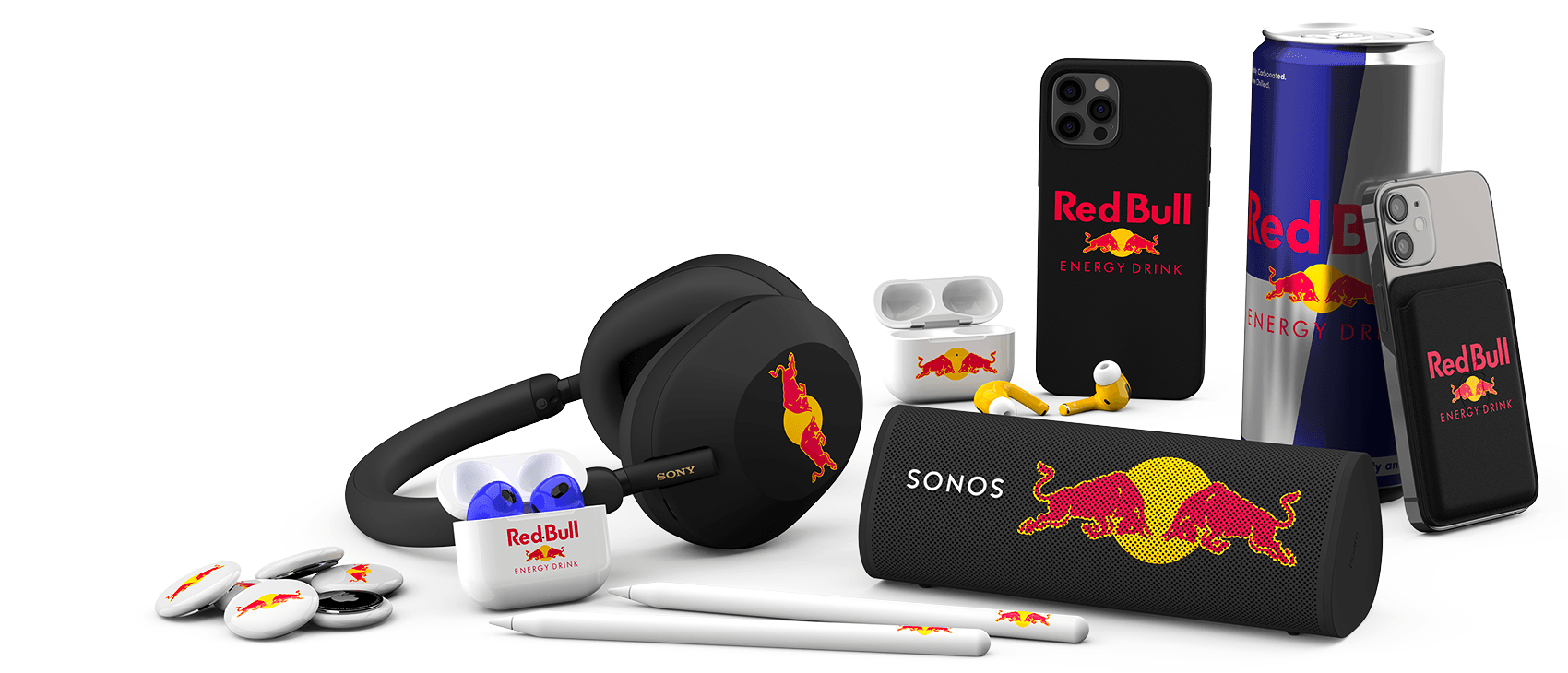
Partner collabs expand what's possible on demand. RUPT brings streetwear-quality cut and sew. Knitwise produces custom knitwear without a 500-unit MOQ. Casetify brings retail-grade phone cases into the merch line. Each one of those moves a category that historically required bulk runs into the on-demand economics that POD pioneered.
How does a hybrid POD and inventory model actually work?
The hybrid model runs POD and inventory side by side. Use POD for apparel where size variance kills bulk forecasting. Use inventory for items where bulk pricing genuinely matters: USB drives, custom tote bags, drinkware. Same dashboard, same fulfillment partner, two production paths.
The decision tree is straightforward. If a SKU has size variance and unpredictable demand by size, ship it POD so you don't end up with a pile of XL hoodies and zero S. If a SKU is one-size-fits-all and demand is steady, run a bulk order to capture the unit-cost discount. Mix the two inside one program.
On the platform side, a single dashboard handles ordering, fulfillment, and reporting across both production paths. The recipient sees one shipment. The brand team sees one report. The procurement team sees one invoice. That's how merch programs scale without breaking the operations team.
What this means for your merch program
If POD has felt like a ceiling on what your merch program can look like, it doesn't have to. Better blanks, broader decoration, real brand collabs, and the option to inventory the right SKUs. That's the version of POD worth building a brand on.
The teams writing merch budgets in 2026 are not asking for cheaper DTG tees. They're asking for product that competes with the streetwear and consumer brands their employees and customers already wear. Print on demand makes that possible without the inventory risk that used to be the price of entry.
Walk through your next POD program with our team and we'll map blanks, decoration, partner collabs, and inventory mix in one conversation. That's the workflow we run for B2B brand teams shifting from a single-SKU promo run to a real product line.
Related reading: Concept to Creation: How Merch.com Brings Swag Ideas to Life and Going Green: Why Sustainable Swag Products Matter.
Glossary: print on demand terms used in this article
Quick reference for terms used in this article:
- POD: print on demand. A production model where each unit is decorated only after the order is placed, eliminating bulk inventory risk.
- DTG: direct-to-garment printing. An inkjet process for full-color graphics on cotton apparel. The default decoration method for most POD providers.
- MOQ: minimum order quantity. The lowest unit count a manufacturer will produce in a single run. Traditional knitwear and phone cases carry MOQs in the hundreds; partner collabs cut that to one.
- Blanks: undecorated apparel or accessories used as the base for decoration. Premium blanks (Sonos, Nike, TravisMathew) lift the perceived value of any print or embroidery applied to them.
- Hybrid model: a merch program that runs POD for size-variable SKUs and bulk inventory for everything else, inside a single dashboard.
Ready to build your merch?
Custom design, production, campaigns, and global fulfillment. One partner, zero platform fees. Nothing off a catalog.
Create an account to browse, design, and request orders right away. A discovery call with your rep completes onboarding.